Bloomsbury Associates


Bloomsbury Spring Update 2026 July - September 2026
In this issue
- Introduction
- Market commentary
- Key market movements for the quarter
- Financial literacy – the life skill that compounds
- How to find New Zealand charities aligned with your values
- Gillies McIndoe Research Institute
- Aotearoa New Zealand Festival of the Arts
- Like what you've read?
- Disclaimer
Introduction
By the time you've read this, the NZ election and US mid-terms will be over. This doesn't impact long-term market behaviour, and we'll wait to see what the wider policy implications are.
With much commentary in the media recently covering the strategy failures of the highest profile KiwiSaver providers, it has been affirming to see our client investments continue to deliver excellent results.
Over the last five years to 30 September, our systematic high growth strategies have returned 10.5% per annum after all costs, which on average have proven 1% greater each year than the best public provider.
Schemes such as MAS and Milford have languished in the post-COVID environment with 5 year annual returns around 8% p/a while struggling Fisher Funds growth strategy returned only 5.5% p/a over the same period. [Source: Morningstar 360]
Let's take a look at what's happened over the most recent period.
We've recently launched Donor Digest, our quarterly newsletter on philanthropy and charitable giving. Sign up for Donor Digest.
Market commentary
If the third quarter of 2026 had been submitted as a film script, a director might have sent it back for being too 'busy'.
There was continuing conflict in the Middle East, another rise in energy prices, renewed inflation concerns and interest rate increases from several central banks. At the same time, businesses continued spending heavily on artificial intelligence (AI), the global economy kept expanding and most share markets finished the quarter higher.
Growth in the face of gloom might feel contradictory. However, as the quarter demonstrated, both can occur at the same time.
Economies and markets absorb many influences at once. Consumers can feel less confident, but it doesn't mean they stop spending. Businesses can face higher costs while still increasing profits. Share prices can rise during an unsettled period because markets care more about anticipated future company earnings and less about immediate news headlines.
The third quarter offered another reminder that the economy, investment markets and the news cycle may be related, but they are not the same thing.
Resilience, not retrenchment
The world economy entered the quarter carrying a sizeable list of worries. Geopolitical tensions remained elevated, energy and transport costs were under pressure, and government finances were stretched in many countries. While these economic conditions are generally unfavourable for growth, a potential global downturn failed to materialise.
In July, the International Monetary Fund (IMF) projected global growth of 3.0% for 2026. In doing so, it described an uneven world in which technology-related demand was helping offset the higher energy prices resulting from the conflict involving Iran. In September, the United Nations update was more reserved, estimating lower growth of 2.6%, but reaching the same broad conclusion – that growth was subdued rather than collapsing.
For many investors, that's an important distinction. Slower growth doesn't mean 'no growth'. Elevated uncertainty doesn't mean businesses stop operating.
Capitalism has fashioned a long track record of successfully adapting to changing economic conditions. In other words, the world economy has a habit of figuring out how to function effectively, even when economists and news outlets might be debating everything in the world that could potentially go wrong.
This development, largely unanticipated by the Trump administration when the war began, was the collateral damage that spilled over into the global economy.
Inflation returned to the front of the queue
The less welcome development was renewed inflation pressure. An energy shock rarely stays confined to the petrol station. Diesel is, of course, used to power trucks that move food and other goods around an economy. So, higher oil and fuel prices eventually work their way into increased transport, manufacturing and household costs.
With prices of most goods and services being affected, central banks remained on high alert. Their natural response to higher inflation is to raise interest rates. However, a potential outcome of 'tightening' rates is that it can lead to reduced economic activity and even slower growth. So, decisions to raise interest rates are never taken lightly.
In the US, the Federal Reserve increased rates by 0.25% on September 16 and forecast US inflation at 3.7% for 2026, noting that a sizable majority of committee members saw "upside risks" to this central forecast. Perhaps not surprisingly, the committee anticipated at least one more interest rate hike before the end of the year. In Australia, the Reserve Bank lifted its cash rate by 0.25% in September to 4.60%, its fourth increase of the year, while retaining the option to tighten further if required.
Not every central bank was confronted with exactly the same economic conditions, but they all faced a similar problem – inflation had become harder to dismiss, while economic growth generally remained strong enough to tolerate higher interest rates, if required.
For households, higher interest rates mean better term deposit rates but also higher mortgage costs. For investors, rising interest rates put downward pressure on bond prices and on the valuations of companies whose expected profits are anticipated far into the future. But that relationship is not absolute. If interest rates are rising because economic activity and corporate earnings are resilient, share markets can still perform well.
Building the AI engine while driving it
Continuing recent trends, AI remained one of the largest sources of global investment during the quarter.
The amount of capital invested in AI-related technology has been so significant that the IMF estimates it alone added approximately 0.5 percentage points to US economic growth in 2025. It also reports estimates suggesting global private-sector AI investment volumes could exceed US$2 trillion in 2026.
To put that staggering sum into context, US$2 trillion is approximately two times the total value of New Zealand's entire housing stock! That's quite an incredible sum to be pouring into AI-related technologies in the space of just one year.
Of course, that money is not only being spent on software. It is also funding semiconductors, data centres, electricity generation, cooling systems, telecommunications networks and construction. In other words, AI investment is positively affecting the wider economy even before anyone can confidently measure its ultimate productivity benefits.
Business adoption of AI is also very real, although highly uneven. For example, in the IMF's February 2026 update, it noted that around 41% of US information-sector businesses were reporting using AI, compared with roughly 13% of manufacturers and 11% of construction firms. Although this AI transformation is being felt throughout the wider economy, it is clearly not occurring at the same speed everywhere.
The jury is also still out about AI's likely long-term impact on productivity and employment. There is simply not enough evidence (yet) to declare that AI will produce permanently higher productivity across economies, or that it will eliminate employment on a large scale. The IMF's analysis suggests that workers with AI-related skills are benefiting, while some middle-skilled occupations exposed to automation may be more vulnerable. It also warns that the eventual returns from today's enormous capital expenditure are far from guaranteed.
The AI investment boom is clearly observable and is contributing to positive economic outcomes, but the eventual winners, losers and effects on wages and productivity are still being discovered.

A demographic headwind
While technology and AI developments are occurring at a rapid pace, there is a much slower-moving economic force that we shouldn't ignore – demographics.
Across much of the developed world, populations are ageing and the number of retirees is rising relative to the working-age population. The OECD expects old-age dependency ratios to reach unprecedented levels in many member countries over the next 35 years and warns that, without positive changes in workforce participation and productivity rates, growth in income per person is very likely to slow.
Migration can help ease labour shortages by bringing in new workers, however migration policy varies sharply between countries. It would therefore be unwise to take a migration story specific to one country and apply it automatically elsewhere.
For investors, demographics are another important part of a complex economic ecosystem. Slower labour-force growth increases the importance of skills development and productivity enhancements. AI may become part of that answer, but it is not yet possible to know how large a part.
What investors experienced
Despite the difficult headlines, global shares generally delivered another small positive quarter.
In the US, the S&P 500 Total Return Index rose 2.3% and the MSCI World Index gained 2.0%, while the MSCI Emerging Markets Index was -0.2% lower, all measured as gross returns in US dollars. New Zealand shares also gained, with the S&P/NZX 50 Gross Index producing a quarterly gain of 1.9%.
Bonds had a more difficult quarter as market yields increased on the back of renewed inflation concerns and growing expectations that central banks may need to contemplate further interest rate hikes. The Bloomberg Global Aggregate Bond Index (hedged to NZD) delivered -2.9% over the quarter.
These figures are not directly applicable to every New Zealand portfolio because differences in underlying investor risk exposures, currencies, hedging, tax and implementation timing all have an impact on an individual investor's precise returns. They nevertheless tell the quarter's main story – shares generally rose while longer-duration bonds struggled.
Ironically, anyone who correctly anticipated higher oil prices, central bank tightening and rising geopolitical tensions might have reasonably expected share prices to fall. That would have appeared to be the logical economic conclusion to draw from the convergence of these events.
However, the market's reaction defied that simple analysis.
Predicting the news is difficult. Predicting both the news and how markets will interpret it is harder again.
The New Zealand perspective
The New Zealand economy continued to recover, but the recovery remained patchy.
New Zealand's GDP increased by 0.2% in the June quarter after a 0.9% rise in March. So, the economy continued to grow, although not at a pace that made conditions feel dramatically better for most households.
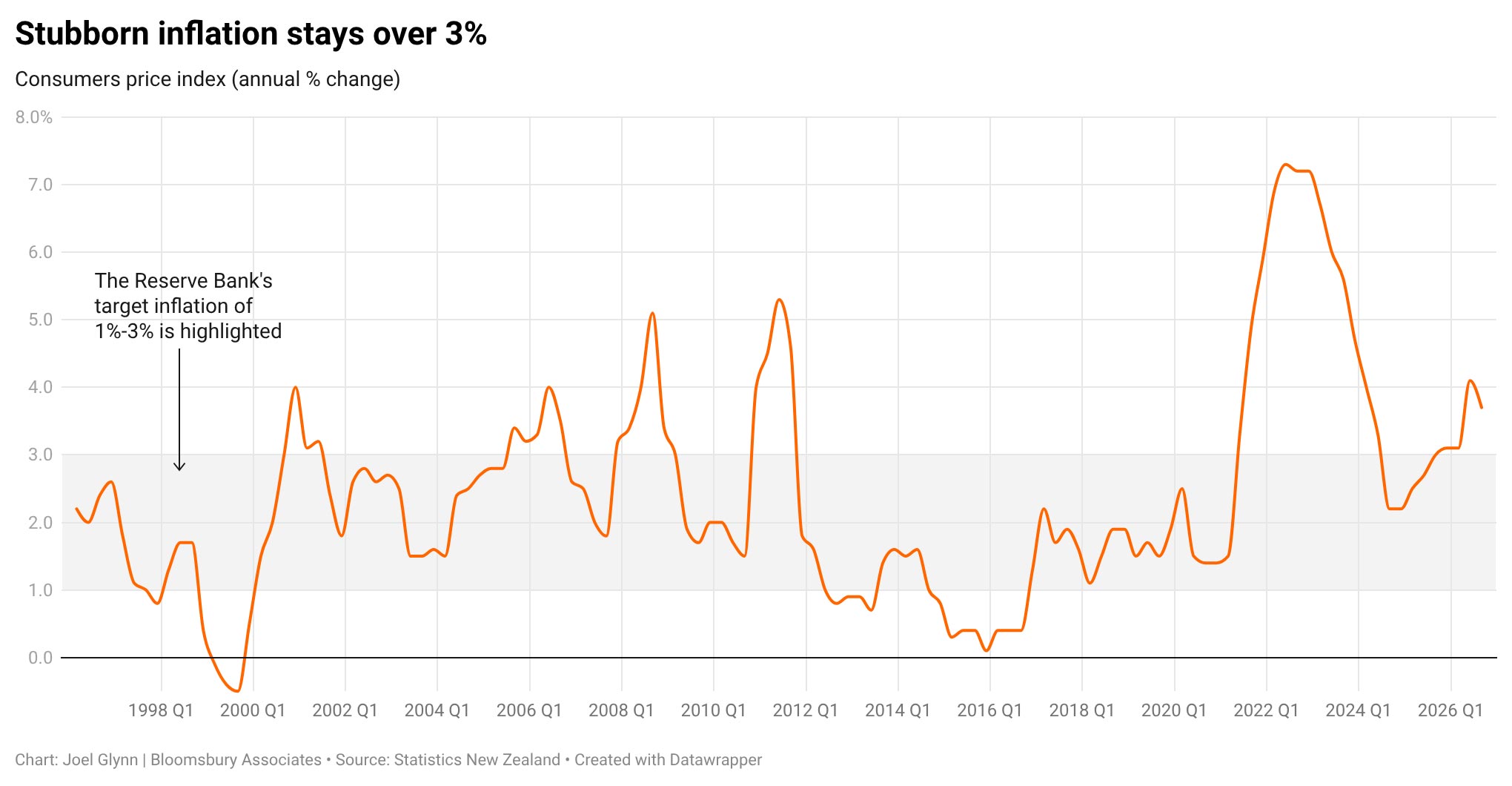
Inflation was a key concern here also. Annual consumer price inflation reached 4.1% in June, up from 3.1% in March. Energy prices had a significant impact on this with the cost of petrol rising 27.5% in the 12 months to 30 June 2026.
Stubborn inflation stays over 3%
Consumer Price Index (annual % change)
See larger version of this image
The Reserve Bank responded by increasing the Official Cash Rate by 0.25% in both July and September to a new benchmark of 2.75%. For borrowers, this dispelled any lingering hopes that mortgage rates might be preparing for a decline. For savers and bond investors, higher interest rates tend to make new fixed income investments more attractive, although existing bond prices generally weaken as bond yields increase.
Since quarter end, the picture has shifted again. Annual inflation eased to 3.7% in the September quarter, but the Reserve Bank expects it to climb to 4.4% by year end. Despite that, it surprised markets by holding the OCR at 2.75% in October. That's welcome news for borrowers for now, but pressure to raise rates again in 2027 is likely to build.
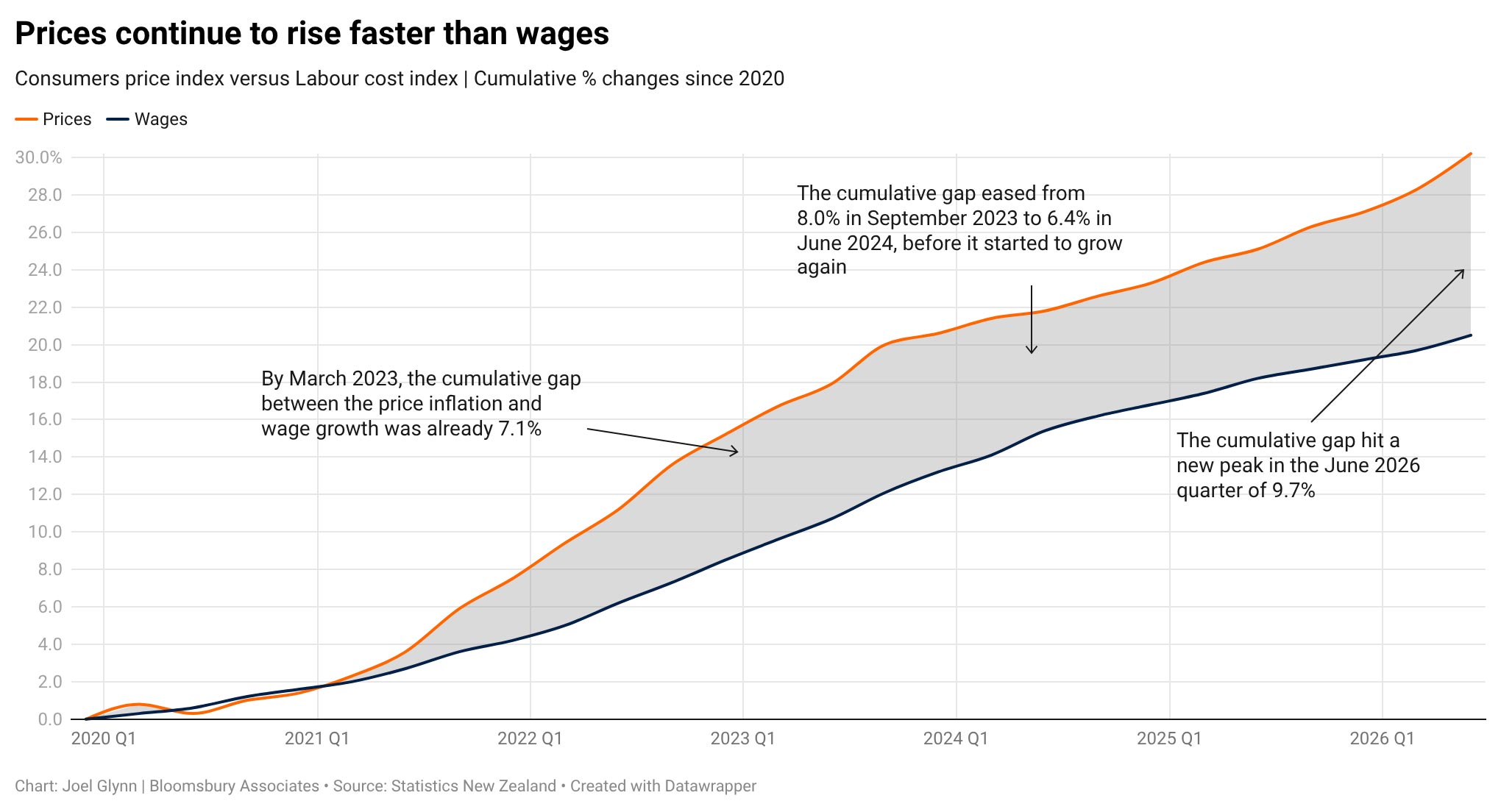
New Zealand's labour market remained soft with unemployment increasing slightly to 5.6% in the June quarter and annual wage inflation running at 2.0%. Meanwhile, migration continued to add to the population, although at a slower rate than during the post-border reopening surge. Net migration was positive by 20,300 people in the year to July 2026, up from 9,600 a year earlier.
Prices continue to rise faster than wages
Consumer Price Index versus Labour Cost Index (cumulative % changes since 2020)
See larger version of this image
With wages growing at around half the rate of inflation, the cost-of-living squeeze is deepening. Between December 2019 and June 2026, consumer prices rose 31% while wages grew 21%. Petrol remains a major driver, with the average price of regular petrol reaching $3.60 a litre in late October, up 38% since the start of the year. Inflation forecasts are also rising overseas, so higher prices on imported goods are likely to keep feeding through.
Unsurprisingly, the housing market remained soft, reflecting this mixed domestic environment. The national median house price was $750,000 in August, down 1.3% from a year earlier, while the REINZ House Price Index was down 0.9%. Overall, sales volumes were 13% lower and properties were taking longer to sell, although conditions varied substantially by region. Canterbury's median price was 1.5% higher than a year earlier, while several North Island markets remained weaker.
The export sector was one of the brighter areas, with a 15% increase year-on-year in total goods exported (as at 31 August 2026). Agricultural export conditions were looking increasingly favourable on the back of improving dairy and meat prices, strong horticulture volumes and a lower New Zealand dollar.
Built to flex, and to last
A well-designed portfolio is a little like a suspension bridge.
A suspension bridge is not safe because it can predict every gust of wind. It's safe because it allows different parts of the structure to absorb pressure in different ways.
Some components are responsible for carrying the load. Other parts provide flexibility. The strength of the bridge comes from how the different pieces work together.
Diversification reflects similar principles. Shares provide access to long-term business growth. Bonds provide income and can offer stability when economic growth weakens, although they will not do so in every quarter. Cash provides liquidity. Global diversification reduces dependence on any single country, sector or economic outcome.
During the third quarter, bonds struggled while shares generally made small gains. In a different quarter, those positions could easily reverse. Unfortunately, no-one knows in advance when that will happen. That's why investing involves risks that we need to be aware of and prepare for, due to the inevitability they will one day occur.
The objective is not to build a portfolio with the flawed expectation of trying to win every quarter. It is to build one capable of remaining resilient through many different quarters to ensure you stay invested long enough for that robust investment structure to do its job.
Key market movements for the quarter
September 2026
The third quarter of 2026 delivered modestly positive share returns across developed markets despite significant macroeconomic and geopolitical headwinds. Renewed conflict in the Middle East pushed Brent crude oil above US$100 per barrel for much of September, reigniting inflation pressures globally and prompting central banks in the United States (US), Eurozone, Japan and New Zealand to tighten monetary policy.
Despite these challenges, the global economy remained resilient. Purchasing manager surveys in both the US and Europe rose to multi-year highs in September, suggesting improving growth and business optimism. International developed market shares delivered a small positive return, supported by Japanese and US shares. Emerging market shares declined marginally as a stronger US dollar, higher bond yields and a sharp sell-off in semiconductor companies weighed on performance following an exceptional first half of the year.
Bond markets experienced their most difficult quarter since late 2024. Higher energy prices, persistent inflation and further policy tightening pushed yields higher. At the same time, increased sovereign bond issuance and significant new borrowing by giant technology companies intensified competition for investor capital.
Both share and fixed interest markets reflected a common theme: resilient economic growth and strong earnings being tested by stubborn inflation and central banks willing to respond.
International shares
Developed market shares delivered a modestly positive result over the quarter, with the MSCI World ex Australia Index returning 1.5% on a hedged basis and 2.7% unhedged. A resilient macroeconomic backdrop and strong earnings growth outweighed concerns around geopolitics and tighter monetary policy.
A buoyant earnings cycle in technology and energy, and to a lesser extent banking, supported markets. Market performance was strongest in July and August before softer conditions emerged in September as oil prices climbed and central banks raised interest rates.
In the US, the S&P 500 Index reached several record highs during the quarter. Technology companies regained momentum following July's semiconductor-led sell-off, while software companies also benefited from strong earnings. Rising precious and industrial metal prices led to gains in resource companies.
The AI investment cycle remained the dominant market theme. NVIDIA's late August result capped an exceptionally strong US earnings season, with profit and revenue both more than doubling year-on-year. Importantly, earnings growth was broad-based, with most S&P 500 sectors reporting year-on-year growth.
Japanese shares were among the strongest performers. Semiconductor companies, exporters and cyclicals contributed positively, aided by improving business confidence.
European shares lagged global peers as investors questioned the sustainability of earnings growth and focused on the impact of rising interest rates. While fiscal support for defence and infrastructure remained favourable, investors preferred regions with greater exposure to AI-related investment themes. The European Central Bank (ECB) raised its deposit rate to 2.5% and markets priced in further tightening.
Source: MSCI World ex Australia Index (net div.)
Emerging markets shares
Emerging markets shares declined slightly during the quarter, returning -0.4% in US dollar terms, although returns to unhedged New Zealand investors were positive due to a slightly weaker New Zealand dollar over the quarter.
The subdued performance of this quarter stood in contrast to the strong gains recorded during the first half of 2026.
The asset class was affected by the global semiconductor sell-off, a stronger US dollar, rising US Treasury yields and higher energy prices. However, performance varied significantly across regions.
China was a positive contributor overall, despite the MSCI China Index declining -4.6% in September. Technology-focused indices fell sharply in September as investors reassessed AI-related valuations and remained concerned about weak domestic demand. Structural challenges, including weakness in the property sector and subdued consumer spending, continued to undermine confidence.
Taiwan continued its incredible year, supported by strong demand for semiconductors. Taiwan Semiconductor Manufacturing (TSMC) reported August revenue growth of +53% year-on-year, reinforcing confidence in the ongoing AI investment cycle.
South Korean shares experienced volatility but recovered from the semiconductor-led sell-off in July. Indian shares faced pressure from elevated valuations and concerns over future earnings growth. Across Latin America, higher commodity prices provided support, although currency movements reduced gains for unhedged investors.
Overall, emerging markets spent the quarter consolidating after a strong first half while absorbing the combined effects of higher US yields, dollar strength and geopolitical uncertainty.
Source: MSCI Emerging Markets Index (net div.)
New Zealand shares
The New Zealand share market generated a positive return of 1.9% during the quarter, although market conditions deteriorated significantly in September.
The NZX 50 Index declined -0.4% during September as higher oil prices, rising global bond yields and a domestic interest rate increase weighed on sentiment. Despite this weakness, gains from July and August were sufficient to produce a positive quarterly outcome.
On 2 September, the Reserve Bank of New Zealand (RBNZ) increased the Official Cash Rate (OCR) to 2.75%. Inflation had climbed to 4.1% in the June quarter, driven largely by higher fuel costs stemming from Middle East conflict. The bank indicated inflation was expected to remain above 3% for the rest of 2026 and signalled that further interest rate tightening may be required.
The interest-rate sensitivity of many NZX-listed infrastructure, utility and property companies created a direct valuation headwind as rates moved higher. Despite these conditions, Auckland Airport, Fisher & Paykel Healthcare and Meridian Energy were among the stronger performers.
Although elevated inflation and tighter monetary policy continue to put pressure on household spending, New Zealand shares performed broadly in line with international developed markets over the quarter.
Source: S&P/NZX 50 Index (Gross with Imputation)
Australian shares
Australian shares delivered a positive return of 1.3% for the quarter (in AUD terms), despite a difficult finish to the period. The ASX 200 Index fell -2.4% in AUD terms in September, after recording a strong first two months. Rising oil prices and interest rates dented investor confidence, although gains during July and August preserved a positive quarterly result.
Economic growth remained resilient, with Australian GDP increasing +0.4% during the June quarter and +2.1% year-on-year. However, inflation remained persistent, forcing the Reserve Bank of Australia to increase interest rates on the last day of the quarter after holding twice through the winter.
At the sector level, financials benefited from higher interest rates, while energy stocks gained from stronger commodity prices. Technology shares were supported by ongoing AI-related investment themes. Healthcare and consumer discretionary sectors faced headwinds from rising bond yields and cautious household spending.
Resources and selected healthcare and technology companies continued to receive support from strong earnings growth, while domestically focused businesses struggled with slower housing activity, weaker consumer demand and higher financing costs.
Returns to unhedged New Zealand investors were improved due to a slightly weaker New Zealand dollar over the quarter.
Source: S&P/ASX 200 Index (Total Return)
International fixed interest
FTSE World Government Bond Index 1-5 Years (hedged to NZD): -0.9%
Bloomberg Global Aggregate Bond Index (hedged to NZD): -2.9%
Global bond markets endured a challenging quarter as inflation concerns and tighter monetary policy drove yields higher.
The shorter-duration FTSE World Government Bond Index declined -0.9%, while the broader Bloomberg Global Aggregate Bond Index fell -2.9%, reflecting the greater sensitivity of longer-duration bonds to rising yields.
A resurgence in energy prices was a key catalyst. Brent crude oil remained above US$100 per barrel for much of September, while European gas prices rose steadily. Although core inflation remained relatively contained, rising energy costs pushed headline inflation higher and prompted central banks to continue tightening policy.
In the US, the Federal Reserve raised interest rates by +0.25% to a target range of 3.75%-4.00%. The US 10-year Treasury yield rose from 4.42% to 5.29% during the quarter, while the 30-year Treasury yield finished at 5.64%, its highest level in more than 15 years.
European bond markets also weakened. The ECB increased rates to 2.5%, while concerns surrounding fiscal deficits and government borrowing placed pressure on sovereign debt markets. French government bonds underperformed, and spreads relative to German Bunds widened meaningfully. UK bond yields climbed to levels not seen since 2007.
Japan also joined the tightening cycle, with the Bank of Japan raising rates to 1.25% and the 10-year Japanese government bond yield reaching 3% for the first time since 1996.
Investment-grade credit generated negative returns due to rising yields. High-yield bonds performed relatively better because of shorter duration and still solid underlying corporate fundamentals.
Sources:
FTSE World Government Bond Index 1-5 Years (hedged to NZD)
Bloomberg Global Aggregate Bond Index, hedged to NZD
New Zealand fixed interest
New Zealand fixed interest markets recorded negative returns during the quarter, with the S&P/NZX A-Grade Corporate Bond Index declining -1.1%.
Bond yields rose in response to the RBNZ's September interest rate increase and the broader global bond market sell-off. In contrast, cash continued to deliver positive returns, with the NZ One-Month Bank Bill Yields Index returning 0.7% for the quarter.
The RBNZ raised the OCR by +0.25% in both July and September, to a level of 2.75%, citing inflation of 4.1% and the inflationary impact of higher fuel costs. The bank warned inflation would remain above target for the remainder of 2026 and indicated further tightening may be necessary.
New Zealand government bonds declined during September, while lower-rated corporate bonds also struggled. Rising yields reduced bond returns by more than any positive offsetting interest income across much of the market.
Although the domestic economy continued to recover, the RBNZ faced a difficult policy trade-off. Inflation was being driven largely by higher energy prices rather than excessive domestic demand, meaning tighter monetary policy risked further pressure on households and businesses already facing elevated living costs.
Source: S&P/NZX A-Grade Corporate Bond Index
Table 1: Asset class returns to 30 September 2026
| Asset class | Index name | 3 months | 1 year | 3 years | 5 years | 10 years |
|---|---|---|---|---|---|---|
| International shares (hedged) | MSCI World ex Australia Index (net div., hedged to NZD) | 1.5% | 14.7% | 20.4% | 11.8% | 12.8% |
| International shares (unhedged) | MSCI World ex Australia Index (net div.) | 2.7% | 18.7% | 24.1% | 16.6% | 15.8% |
| Emerging markets shares | MSCI Emerging Markets Index (net div.) | 0.4% | 33.0% | 26.7% | 13.5% | 11.9% |
| New Zealand shares | S&P/NZX 50 Index (gross with imputation) | 1.9% | 4.8% | 7.8% | 1.6% | 7.4% |
| Australian shares | S&P/ASX 200 Index (total return) | 2.5% | 10.9% | 16.7% | 11.3% | 10.8% |
| International fixed interest (sovereign) | FTSE World Government Bond Index 1-5 years (hedged to NZD) | -0.9% | 0.2% | 3.5% | 1.4% | 1.7% |
| International fixed interest (broad) | Bloomberg Global Aggregate Bond Index (hedged to NZD) | -2.9% | -2.1% | 3.3% | -0.4% | 1.3% |
| New Zealand fixed interest | S&P/NZX A-Grade Corporate Bond Index | -1.1% | 1.1% | 6.1% | 2.7% | 2.9% |
| New Zealand cash | New Zealand One-Month Bank Bill Yields Index | 0.7% | 2.6% | 4.0% | 3.8% | 2.5% |
Unless otherwise specified, all returns are expressed in NZD. We assume Australian shares and emerging markets shares are invested on an unhedged basis, and therefore reported returns from these asset classes are susceptible to movement in the value of the NZD. Index returns are before all costs and tax. Returns are annualised for time periods greater than one year.
Financial literacy – the life skill that compounds
Financial literacy is not just knowledge about money. It is a practical life skill. It helps people have more productive conversations and make better decisions about saving, borrowing, investing, KiwiSaver and retirement. The benefit is rarely dramatic in a single year, but over time it can compound into very different outcomes.
Most people think of financial literacy as knowing the answer to a few money questions. What is compound interest? How does inflation work? Why diversify? Those questions matter, but they are only the starting point.
The bigger point is that financial literacy influences hundreds of ordinary decisions over many years. It affects whether someone increases their KiwiSaver contribution, understands the trade-off between cash and growth assets, pays down expensive debt, stays invested through a market fall, or asks for help before a major financial decision. None of those choices may feel life-changing on the day. But consistently smart, small decisions can compound in a big way.
New research published by our former Investment Committee member Dr Bart Frijns of Auckland University of Technology gives useful weight to this idea. His Netherlands-based study measured financial literacy in 2011, then looked at the income and savings of the same households in 2019. That eight-year gap is important because it helps answer a key question: does financial literacy contribute to better outcomes, or do people simply become more financially literate after they have more money?

A smarter way to look at the question
For years, researchers have observed that financially literate people tend to be wealthier. That may sound obvious, but it does not prove that literacy created wealth. Instead, it's possible that wealthier households may have more reason to learn about tax, investments, pensions and estate planning. So literacy increases with wealth rather than because of it.
Dr Frijns' study is helpful because it looks forward. Researchers used data from households in the Netherlands and compared what people knew financially in 2011 with where they ended up eight years later. 'What people knew financially' was measured by their answers to four practical questions covering compound interest, inflation, diversification and the relationship between interest rates and bond prices.
Although the study is observational and limited to 475 households, its design is stronger than a simple one-off survey on financial literacy because you can measure change over time. While a financial literacy score in 2011 doesn't guarantee a particular level of wealth in 2019, it does provide insight into the relationship between the two over time.
The finding investors should not ignore
The headline result was simple. Each additional correct answer on the four-question financial literacy test in 2011 was associated with €4,644 higher annual income and €12,540 more savings in 2019. In New Zealand dollar terms, the researchers described the figures as approximately $7,900 higher income and $21,000 higher savings.
This is a striking result. The researchers found that one extra point on the literacy scale was associated with roughly a 12% increase in income and a 25% increase in savings.
The implication is that people who understand money a little better make decisions that, over eight years, add up to significantly better financial outcomes.
Now let's look more closely at the concepts tested. The four questions covered compound interest, inflation, diversification and the relationship between interest rates and bond prices.
Almost everyone understood compound interest and inflation. The weaker areas were diversification and bond pricing. Only 64% of respondents correctly understood diversification, and only 30% correctly understood the relationship between bond prices and interest rates. That is telling because understanding diversification and how bonds (debt) are influenced by interest rates sit near the heart of everyday investment and borrowing decisions.
| Concept | Correct responses | Why it matters |
|---|---|---|
| Compound interest | 95% | The engine behind long-term saving and investment |
| Inflation | 94% | The quiet force that erodes purchasing power |
| Diversification | 64% | A foundation for managing risk without relying on one outcome |
| Relationships between bond prices and interest rates | 30% | Important for understanding borrowing costs and why defensive assets can still fluctuate in price |
Why this matters for New Zealand families
The study was conducted in the Netherlands, and while the answers of New Zealanders may have been slightly different, the underlying lessons are no less relevant. New Zealand households face the same kinds of compounding decisions throughout their lives: how much to contribute to KiwiSaver, which fund type to use, how much debt to carry, whether to diversify or concentrate an investment and how to prepare for retirement.
The point is not that every investor needs to become an expert. Most do not. The point is that sound financial decisions are often cumulative. A slightly better choice made early, repeated consistently and supported by good advice can create a very different outcome from a slightly poor choice left unchecked.
Advice may be the key
Financial literacy is valuable, but knowledge alone is not always enough. People can understand the idea of compounding and still delay saving. They can know diversification is sensible and still become uncomfortable when markets fall. They can know debt is expensive and still struggle to change behaviour. This is where advice has a practical role.
The purpose of good advice can be boiled down to helping someone make financial decisions they are proud of and helping them avoid decisions they regret. The best decision is not always the one that produces the greatest financial return. It may be a deliberate choice to use wealth to support the life someone wants to live, rather than continuing to save it. What makes it a good decision is that the trade-offs are understood and the choice is aligned with what matters most to that person.
The best advice often looks simple from the outside. Increase contributions. Diversify properly. Avoid panic selling. Repay high-interest debt. Keep an emergency reserve. Review insurance. Build an estate plan. And perhaps most important, understand what you really value (what's more important than money) and ensure your decisions align with those values. But simple does not mean easy. These are the quiet decisions that shape long-term financial wellbeing.
The big takeaway
What Dr Frijns' study shows is something we've thought about intuitively for a while. We believe the most useful way to think about financial literacy is as a form of human capital. We invest in education, training, qualifications and careers because those skills improve our prospects and ability to earn more over time. Financial literacy deserves a place beside them because it does the exact same thing.
The evidence from this study is not that financial literacy guarantees wealth. It does not. Income, opportunity, health, family circumstances, housing, employment and luck all matter. The more balanced conclusion is that financial literacy appears an often overlooked ingredient that can improve financial outcomes over time.
That should be encouraging rather than intimidating. Financial wellbeing is not the result of a single perfect decision. It is built by a series of reasonable decisions made with better understanding and repeated over many years. The gains may feel modest at first. Then, much like investment returns, the effect becomes clearer in hindsight.
In that sense, financial literacy behaves a lot like compounding itself. Small improvements in understanding can lead to better decisions. Better decisions can lead to better behaviour. Better behaviour, given enough time, can change a family's financial future.
If you have friends or family members who you think could benefit from reading this article, please feel free to share it with them. We would love to help all New Zealanders make better financial decisions, so we are happy for this information to be shared.
Our aim is not to turn everyone into an investment expert. Rather, it's to help people build confidence with money and make sound decisions early, before the impact of those decisions has years to compound.
References
De Beckker, K., Frijns, B., Hubers, F., & Derkx, S. (2025). The long-term impact of financial literacy on wealth: Evidence from longitudinal data. Economics Letters, 257, 112682.
How to find New Zealand charities aligned with your values
Bloomsbury Associates is excited to announce our new tool that enables donors to connect with the causes they care about. The NZ Charity Explorer is a simple search engine to help donors unlock the Charities Register, find charities aligned with their values, and start giving.
Our readers may remember the first tool we launched earlier this year - The Giving Gauge - which helps users answer the two most common questions we get from people curious about giving:
- How much can I afford to give?
- Can I start giving now?
The Giving Gauge has helped users get these answers, and we hope after using the tool they feel more confident about their capacity to give and their ability to bring their giving forward.
To date, 79% of Giving Gauge users have found that they can afford to start giving now and the estimated median giving budget is approximately $47,000 per year.
Now, armed with their Giving Gauge results, some users have a third question:
- How do I find a charity to give to?

That's why we're launching the NZ Charity Explorer.
Why finding a charity is harder than it sounds
Donors have told us that the Charities Register is hard to navigate, even when you have a particular charity in mind, let alone when you're trying to scout for charities that align with your values.
We recently built a searchable list of charities eligible for philanthropic investment under the Active Investor Plus (AIP) visa scheme. But we realised that it isn't just AIP applicants facing this problem – New Zealand donors want help unlocking the Charities Register too. So we've expanded the tool to include all 29,000 registered charities.
We've also added more search filters and analysis of Register data, to help donors find the information they need to start giving.
How Charity Explorer helps donors find charities aligned with their values
The NZ Charity Explorer is a simple search engine, using official data from the Charities Register, to help donors find charities aligned with their values.
With NZ Charity Explorer, donors can search across different dimensions, including a charity's purpose, region, and trustees, to identify potential charities that align with your values and support the causes you care about.
NZ Charity Explorer lets you identify:
- charities that have a charitable purpose aligned with your philanthropic goals
- charities that operate locally, in your region or community
- who the trustees are for your chosen charities
- which charities your social network are working with
- charities that operate in developing nations or in response to specific international emergencies
- charities that are faith-based, with beliefs that match your religious values.
However you want to give, you can find the right charity with NZ Charity Explorer.
Try NZ Charity Explorer now.
Gillies McIndoe Research Institute
A year of growth and research achievements at Gillies McIndoe
Gillies McIndoe Research Institute, an independent biomedical research organisation based in Wellington, New Zealand, continues to celebrate a year of growth, with new researchers joining the team and several postgraduate students reaching important academic milestones.
The Institute recently welcomed Melissa Bourrai, a new doctoral researcher from Algeria. Melissa's research focuses on keloids, a form of excessive scar tissue that can continue growing beyond the original wound and frequently return after treatment. Her project will investigate how keloid tissue uses energy and processes nutrients, using a novel three-dimensional laboratory model to better understand the biological processes driving its growth and identify potential new approaches to treatment.
Another doctoral researcher is expected to join the Institute soon, further expanding its research capabilities.

The Institute is also pleased to share that Marco Massimino, whose doctoral research is generously funded by Bloomsbury Associates, is settling in well and making excellent progress.
Marco joined the Institute from Italy and is investigating venous malformations, abnormalities in blood vessel development that can cause pain, swelling and other complications. His research aims to improve our understanding of these conditions and contribute towards developing more effective treatment options.
It has also been a particularly rewarding period for the Institute's postgraduate researchers, with three PhD thesis submissions and one Master's thesis submission.
Sam Siljee has submitted his doctoral thesis investigating lung cancer, while Freya Weth has completed her doctoral research exploring combinations of repurposed medications as potential treatments for glioblastoma, an aggressive form of brain cancer. Clara López Vásquez has also submitted her doctoral thesis investigating the biological differences between meningioma brain tumours, including the potential influence of sex hormones and metabolic pathways. All three researchers now await their oral examinations, the final stage of their doctoral journey.
The Institute also congratulates Mia Kibiki on submitting her Master's thesis, which examined the tumour microenvironment in glioblastoma. Mia has now moved to Auckland to begin the next chapter of her professional career, and the team wishes her every success.
These achievements reflect the dedication of the Institute's researchers and the importance of investing in the next generation of biomedical scientists.
We're proud to share the following message from the team at Gillies McIndoe Research Institute:
We extend our sincere gratitude to Bloomsbury Associates for their generous support of Marco's doctoral research. Your investment is helping provide the opportunity for a young researcher to pursue important scientific questions and work towards improving treatment options for people affected by venous malformations. We are grateful for your continued belief in our researchers and the difference their work may make.

Pictured: (Left to Right) Melissa Bourrai, Sam Siljee, Freya Weth, Clara López Vásquez and Mia Kibiki.
Our charity: Gillies McIndoe Research Institute
The Gillies McIndoe Research Institute is investigating new treatment options for patients with brain cancer, vascular birthmarks, and keloid scars. Help us to help them continue this vital work to make effective, affordable treatment a reality for patients who need it most.
Aotearoa New Zealand Festival of the Arts
2026 Wellington Jazz Festival highlights
The 2026 Wellington Jazz Festival marked a major milestone, celebrating its 30th anniversary with more than 180 gigs across almost 70 venues. For the first time, Bloomsbury Associates joined the Festival as its inaugural Corporate Jazz Kairangi, supporting a landmark year for music and culture in the Capital.
Across five days, thousands of people enjoyed an adventurous programme spanning international stars, leading Aotearoa artists and unexpected musical encounters in galleries, cafés, churches and public spaces.
Highlights included the Joey Alexander Trio's opening performance, the infectious New Orleans sounds of Rebirth Brass Band (in the Wellington Cable Car, Cuba Street Mall and then finally in Meow Nui!), Macy Gray's sold-out soulful St James Theatre show and Benjamin Clementine's exclusive Aotearoa performance. Pōneke artists also made their mark, with Zoe Moon's sold-out Real Black for Me tribute to Roberta Flack and the Festival's powerful finale: the world premiere of Hikurangi Schaverien-Kaa's commissioned work Te Ao Kōhatu.
The Festival brought an unmistakable energy to Wellington, showcasing the city's vibrant music scene, supporting local venues and businesses, and connecting audiences through live music.
Relive the highlights of the 2026 Festival in our wrap video:
Hear from Philip Stevenson as he reflects on why Bloomsbury Associates chose to become the Wellington Jazz Festival's inaugural Corporate Jazz Kairangi. Watch Behind the Beat with Bloomsbury Associates:
Our arts charity: Aotearoa New Zealand Festival of the Arts
We are proud to be the inaugural Patron Partner of the Aotearoa New Zealand Festival of the Arts. Our hope is through philanthropy to have an impact on the arts and for our clients to experience well-being through the awe and wonder of culture and creativity spanning all art forms. Find out more about our Patron Partnership.

Like what you've read?
Please feel free to pass this update on to friends and colleagues who may enjoy it...
If you would like to talk about anything discussed in these articles further, please feel free to call or email.
Phone: +64 4 499 6979
Email: info@bloomsbury.co.nz
Disclaimer
This document has been provided for general information purposes only.
The information in this brochure does not constitute personalised financial advice for any person nor does it constitute advice of a legal, tax, accounting or other nature to any persons. Recipients should seek professional advice before taking any action.
This brochure is based on information obtained from sources believed to be reliable and accurate at the time of preparation, but its accuracy and completeness is not guaranteed.
Any information, analysis or views contained herein reflect our opinion at the date of publication and are subject to change without notice.
None of Bloomsbury Associates Limited ("BAL"), its directors, officers, employees, agents or associates accept any liability whatsoever for any errors or omissions; or for any direct or indirect loss or damage of any kind arising out of the use of, or reliance on, the information provided in this brochure.
Past performance is not indicative of future results, and no representation or warranty, express or implied, is made regarding future performance. Investments are volatile and may fluctuate in that values can go down as well as up and investors may get back less than originally invested.
None of BAL, its directors, officers, employees, agents, associates or any other person guarantees the securities referred to in this brochure or the performance of those securities.
BAL, its directors, officers, employees, agents and associates may hold securities mentioned in this brochure (or related securities) as principal for their own account.
This brochure may only be distributed to investors in New Zealand and other jurisdictions to whom, under relevant law, this brochure may be lawfully distributed.

Bloomsbury Associates is a CEFEX certified firm