Bloomsbury Associates


Bloomsbury blog Wages still lag prices as RBNZ hold rates steady in October
Bloomsbury blog post, 01 November 2026
Inflationary pressure has picked up again over the last 12 months and the Reserve Bank has responded by hiking interest rates twice this year. However, a surprise decision to hold interest rates steady in October will have implications for borrowers, savers, and the cost-of-living crisis.
Inflation creeping back in to the economy
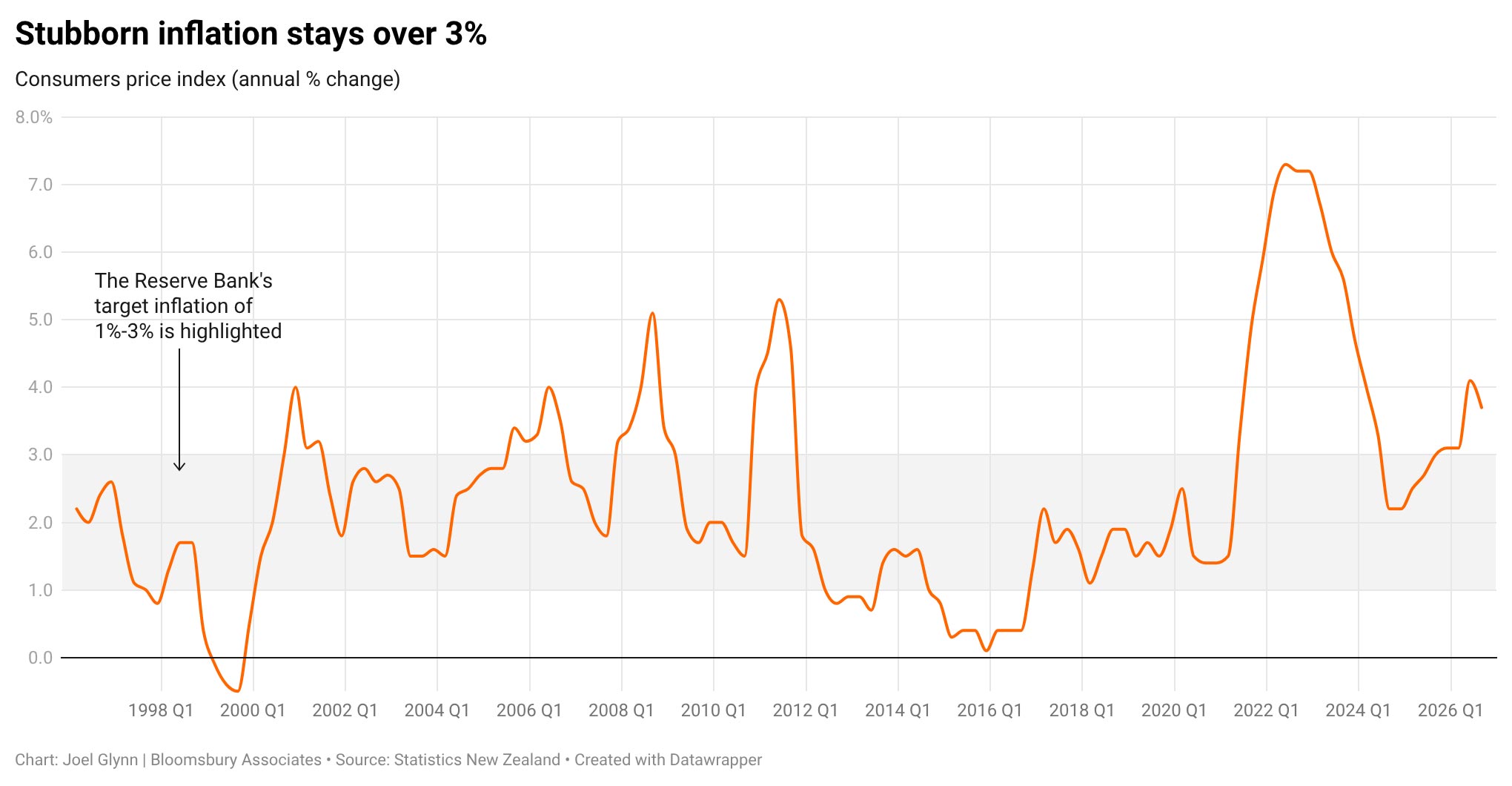
Inflation was 3.1% p.a. (per annum) in December 2025, and it has stubbornly stayed just above the Reserve Bank's upper target of 3% p.a. throughout 2026. It climbed up to 4.1% p.a. in the June quarter, before easing to 3.7% p.a. in the September quarter.
Stubborn inflation stays over 3%
See larger version of this image
The Reserve Bank expects inflation to lift to 4.4% p.a. in the fourth quarter of 2026. Despite this strong inflationary pressure, the Reserve Bank kept the Official Cash Rate at 2.75% in October, in an unexpected decision. The decision to hold interest rates steady, while beneficial for borrowers, could exacerbate the cost-of-living crisis for many households.
What is the cost-of-living crisis?
A cost-of-living squeeze occurs when prices for household goods increase more quickly than household incomes. We have estimated the extent of cost-of-living crisis by analysing the difference between the increase in the consumers price index (consumer prices) and the labour cost index (wages) since December 2019.
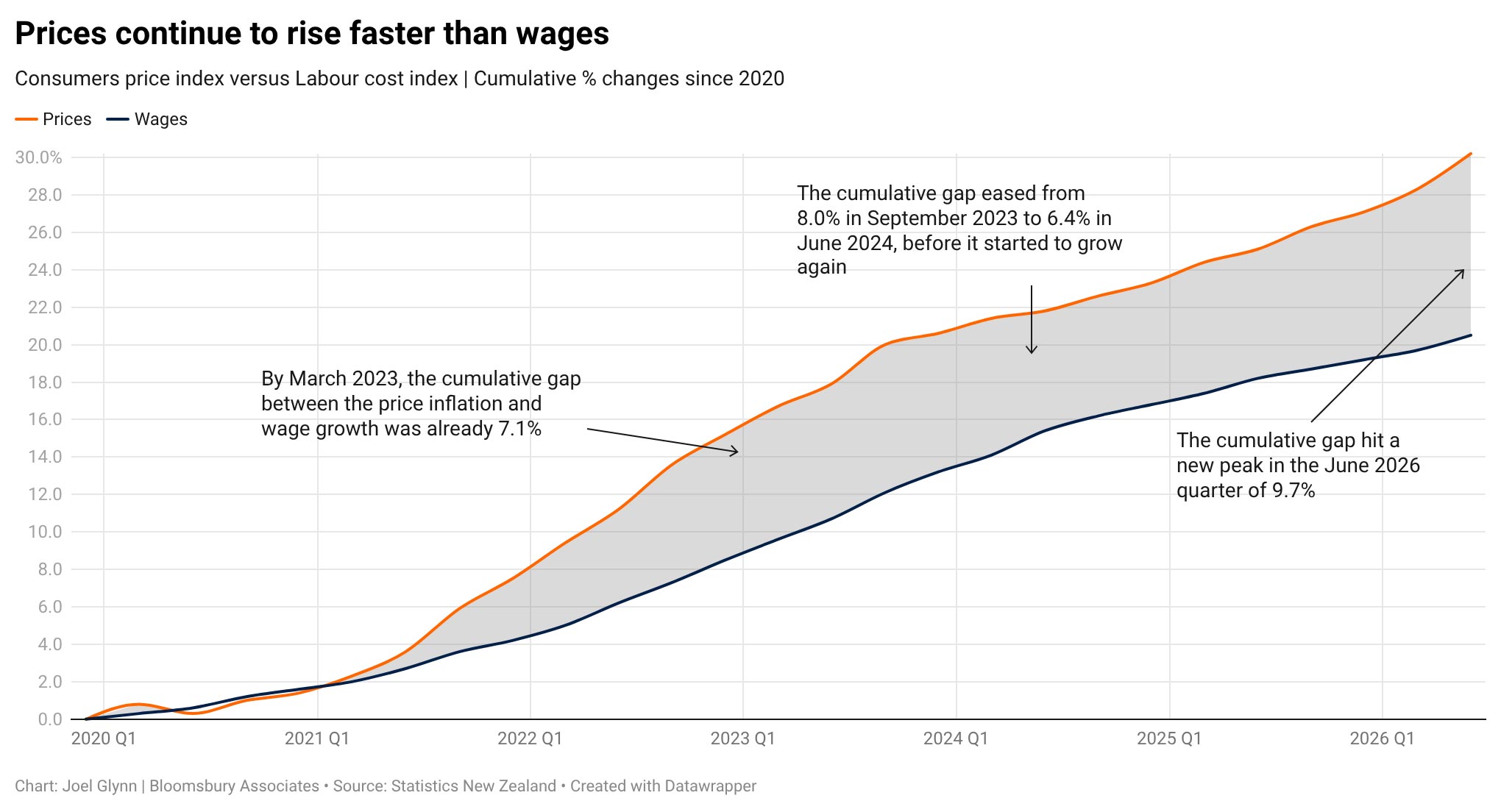
In New Zealand, commentators have declared we are in a cost-of-living crisis since late 2021. Between December 2019 and December 2021, consumer prices rose 7.5% and wages only increased 4.2% - a difference of 3.3%.
Unfortunately, the cost-of-living crisis was only getting started. By September 2023, the cumulative gap between price inflation and wage inflation was 8.0%.
Prices continue to rise faster than wages
See larger version of this image
After peaking at 8.0%, the cumulative gap between price inflation and wage inflation started to shrink in early 2024, as wages began to rise faster than consumer prices. This was real wage growth, easing the cost-of-living challenges facing New Zealand households.
However, by June 2024, the cumulative gap between prices and wages started to grow again. Over the next two years, prices again increased faster than wages. Between December 2019 and June 2026, consumer prices in New Zealand increased 31%. Wages only grew 21%.
Far from being over, the cost-of-living crisis is getting worse.
How do we fix the cost-of-living crisis?
The answer to ending the cost-of-living squeeze is to create conditions where household incomes can grow in real terms, meaning wage growth must be higher than consumer price inflation for a prolonged period of time – the longer the better.
As we mentioned above, there is no expectation that price inflation will ease in the near future. The Reserve Bank expects inflation will be 4.4% p.a. next quarter.
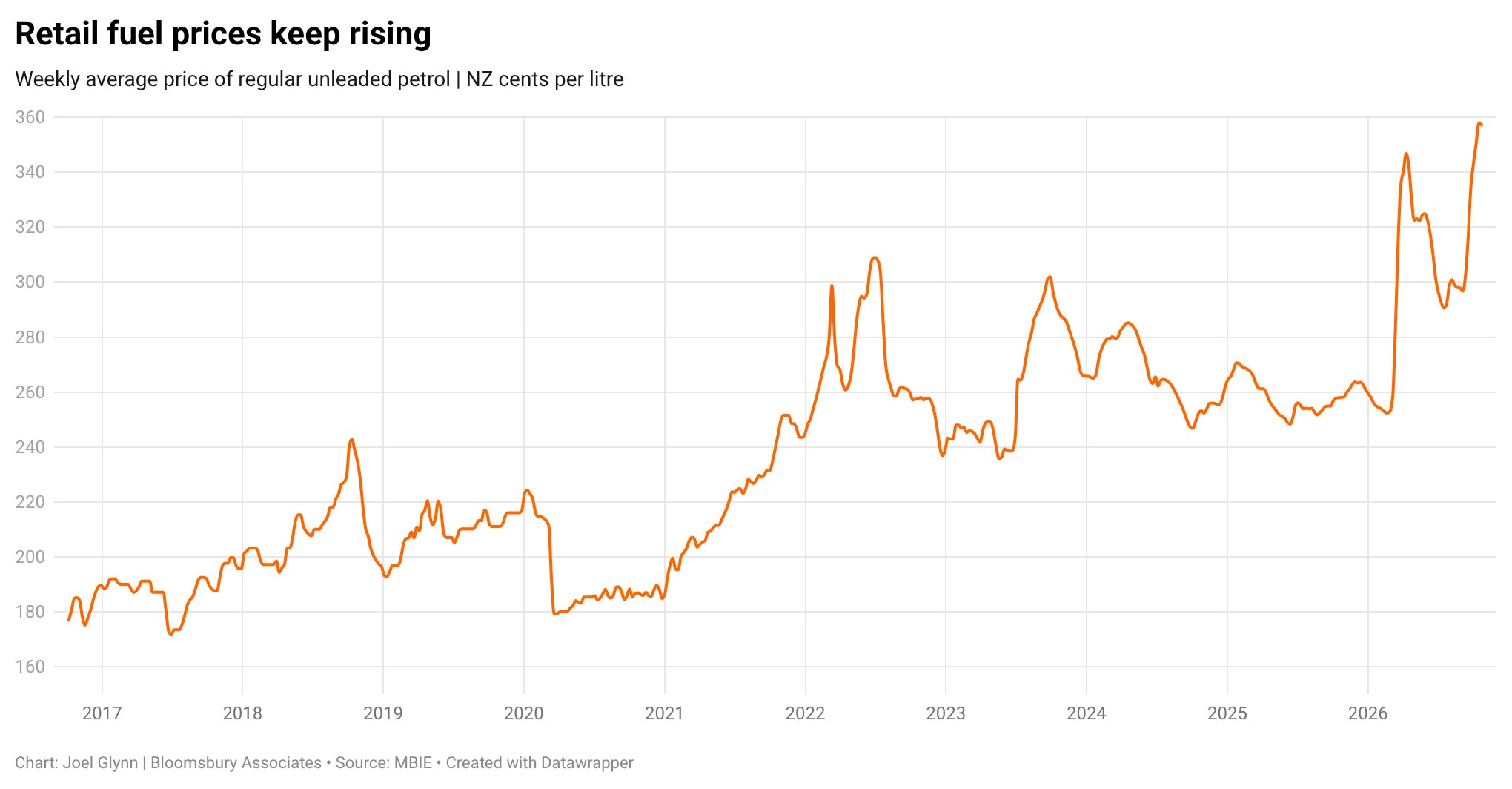
If retail fuel prices continue to rise, the squeeze on household budgets will persist. In late October, average regular petrol prices in New Zealand reached $3.60 per litre, a 38% increase from the start of the year.
See larger version of this image
It's not just New Zealand. Inflationary pressure is growing globally. Reuters reported last week that inflation forecasts for 2027 were increased in 31 out of the 50 economies surveyed (one of which was New Zealand). This means that as the prices of goods and services from overseas increases, we will import that inflation into our economy.
The focus for policymakers should be:
- Controlling price inflation.
- Creating economic conditions for real wage growth to occur.
To deal with (1), the Reserve Bank will face pressure to hike interest rates in 2027. For borrowers, particularly those with mortgages on floating rates or that need to renew, higher borrowing costs will add to cost-of-living challenges. However, if borrowers can deal with the squeeze in the short-term, higher inflation will eat away at the real value of debt in the longer-term.
Higher interest rates are good news for savers. They will get better returns on cash, and the expected returns for riskier assets like bonds and shares could increase as the risk-free rate of return is lifted.
Dealing with (2) is a much more complex issue. Growing wages more quickly than consumer prices will involve prioritising economic growth. Creating real wage growth will also involve increasing productivity, so New Zealand's labour force produces higher value economic output per hour worked.
Investing in and implementing new technologies; making upskill training affordable and accessible; and encouraging entrepreneurs and small businesses to create new economic value will all be important.